Gowanus
Loft Space.
Tell us once what you're after — including the floors that never hit the listing sites. A person reads it. That's the whole thing.
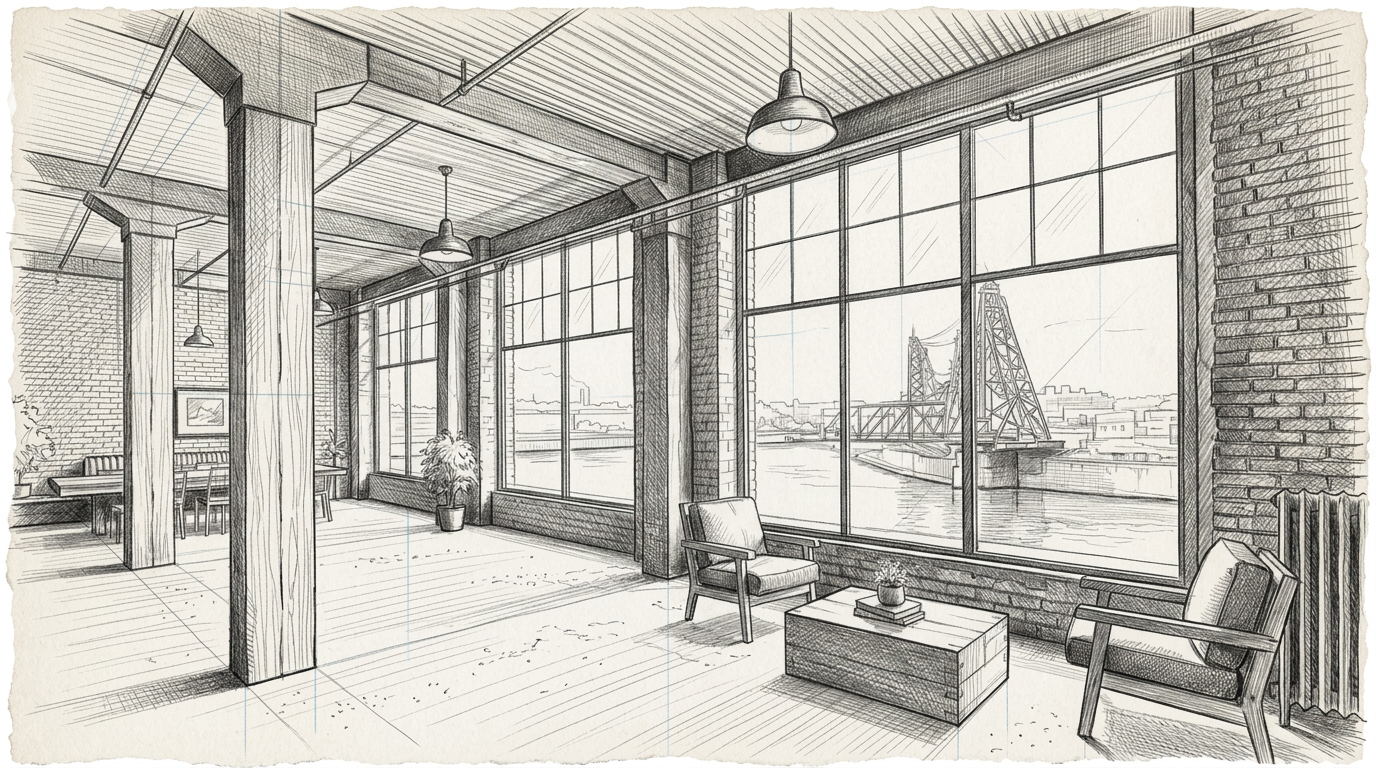
Seven questions.
That's the whole thing.
Under two minutes. No account, no login. A person reads every one.
How much room do you need?
Before you tour, hear what to look for.
Structure, submarkets, and the questions worth asking on a walkthrough — including the ones that decide whether a floor works for what you make.
The risks of leasing a Gowanus canal loft
Two brokers talk through the rezoning, the filled marsh and what to ask on a tour — 6 minutes.
AI-narrated
Read the transcript
Host 1So imagine you are stepping into this breathtaking 1880s brick and timber space in Gowanus, Brooklyn, and you're touring what looks like the absolute perfect commercial office loft.
Host 2Right — I mean, it looks incredible on the surface.
Host 1Exactly. But what you can't see is that the lease paperwork, and the invisible marshland literally right under your feet, could sink your business before you even move in.
Host 2So using the real estate notes and neighborhood details you shared, we're doing a deep dive today. We want to arm you with a practitioner-level guide to navigating this transitioning market.
Host 1Because leasing here is, honestly, a lot like dating. You really have to figure out if the building owner wants a decade-long relationship with you, or if they're just waiting to redevelop.
Host 2Yeah — before you even look at the physical bricks, you have to look at the paperwork.
Host 1You do. In most neighborhoods the first question is what kind of building you're in. But here, you have to uncover the owner's true plans. The building stock is super consistent — heavy industrial brick and timber from 1880 to 1940.
Host 2Built entirely to serve the canal.
Host 1Exactly. But there was this massive rezoning in 2021. Roughly eighty blocks shifted from manufacturing to mixed use.
Host 2Which means two identical-looking buildings side by side can offer completely different futures. One owner might be leasing industrial floors for a decade, and the other is just collecting rent while they prep for demolition.
Host 1So to tell them apart you really have to ask specific questions. What is the remaining term on the master lease? Is there a demolition clause? And what actually happens to your expensive build-out if the building trades hands?
Host 2And even the most secure lease won't matter if your basement fills with water.
Host 1Absolutely — which brings us to why these massive, heavy-duty buildings sit on such vulnerable ground. If you go all the way back to 1636, Dutch farmers settled on a tidal creek named for a Lenape sachem, Gouwane.
Host 2Which was basically salt meadow and oyster beds, right?
Host 1Exactly. Meaning every industrial building that came after is built right on filled marsh. And between 1849 and 1869 they dredged that creek into a massive shipping canal.
Host 2Which became this industrial powerhouse, pulling in coal yards and manufactured gas plants.
Host 1And those gas plants left behind the coal tar runoff that eventually gave the water the nickname Lavender Lake.
Host 2Okay — but here's where it gets really interesting for today. How does a 19th-century canal directly impact a modern tenant's tour right now?
Host 1The physical payoff is that those buildings were engineered to load and unload heavy cargo right onto that canal. That is the exact mechanism that gives you massive freight elevators, roll-up doors at grade, and incredible floor loads today.
Host 2But because it's built on filled marsh, tenants really need to interrogate the flood history — not just the block, but that specific ground floor and basement.
Host 1Absolutely. You have to know what happened there in the last serious storm. And modern zoning has carved this history into three distinct micro-markets now. Down on the Nevins corridor near Hamilton and Ninth, that's your heavy warehouse stock — larger contiguous floors, better truck access, but it's thinning out fast.
Host 2And then moving east toward Third Avenue and Third Street, up toward Douglass and Degraw — that's the fabrication and art core. Metal and wood shops, ceramics, anchored by Powerhouse Arts in the old power station.
Host 1And then closest to the subway, at Union and Carroll Streets, is the most finished creative workspace — mostly demised small suites.
Host 2So what does this all mean when we're actually standing inside the space on a tour? Let's get really specific.
Host 1Beyond getting the water history, you need to demand the floor load capacity in writing, in pounds per square foot.
Host 2Got it. What about power?
Host 1You need to verify three-phase power availability — that's the heavy-duty current you need for fabrication, not just laptops. Ask about the amperage, what's spare on the panel, and who actually pays to upgrade it.
Host 2And ceilings?
Host 1When they say high ceilings, you have to confirm it's clear to deck — the actual height to the structural roof, not just the false bottom of the HVAC ducts. Plus check if the freight elevator opens directly into your space, and verify rentable versus usable square footage.
Host 2Okay, wait. Between demolition clauses and flooded basements, this neighborhood just isn't for everyone, is it?
Host 1It's really not. The industrial supply is shrinking. If you require a guaranteed decade of certainty for manufacturing, you are much better served in East Williamsburg or Sunset Park, where the zoning actually protects the use. Or if you just can't manage the ground floor flood risk.
Host 2But don't fear the EPA Superfund cleanup on the canal. The EPA has been dredging and capping since 2010. It's finite, federally supervised noise.
Host 1Right — mostly trucks and closed bank sections at street level.
Host 2Exactly. The real major payoff here is the transit. You have the F and G at Carroll and at Smith–9th, which is the highest elevated station in the system, plus the R along Fourth Avenue. You can be in Midtown in about half an hour.
Host 1Finding the right space here feels like knowing about a secret menu.
Host 2It really does. Ownership is this quiet mix of long-hold industrial families and newer investors who bought around the rezoning, so space moves quietly between locals who already know each other. Knowing which owners will actually do a five-year deal is the true value here — and none of that is on a listing site.
Host 1Which is exactly why you shouldn't rely on listings. Use the short form on this site. It's seven questions, no account needed, and it's read by a real person who follows up to match you directly with unlisted commercial office loft spaces.
Host 2It connects you to the hidden market. Because as this rezoning continues to transform these legacy spaces, it leaves you wondering: where will the physical fabricating soul of the city migrate to next?
Bond Street across to Fourth Avenue, Baltic down to Hamilton — a mile and a half of working canal wedged between Carroll Gardens and Park Slope, and the last industrial floors in brownstone Brooklyn.
Industrial floors, half an hour from Midtown.
The reason tenants pick Gowanus over the outer industrial districts. You get roll-up doors and freight without the commute that usually comes with them.
- Carroll St
- Smith–9 St
- 4 Av–9 St
Carroll Street is the stop most Gowanus buildings are measured from — roughly half an hour to Midtown. Smith–9th is the highest elevated station in the system, with the view to match.
- Union St
- 4 Av–9 St
The eastern edge, and the direct run down to Sunset Park or up through Downtown Brooklyn into Lower Manhattan.
- Smith St
- Fifth Av
- Court St
- Third Av
The B61 is the practical link to Red Hook, which has no subway at all.
Driving and loading work here too — the BQE and the Hugh Carey tunnel are close, which is unusual for a neighborhood this well served by subway. It's the combination, not either one alone, that makes the canal blocks worth the rent.
A working canal that outlived everything built to use it.
1636 → today
Gouwane's creek
Dutch farmers take land along a tidal creek the Lenape called after a local sachem, Gouwane. The marshes either side of it are salt meadow and oyster bed — the oysters were famous, and shipped as far as the Netherlands. Everything industrial that follows is built on filled marsh, which is why so much of this neighborhood floods.
The Maryland 400
During the Battle of Brooklyn, roughly four hundred Maryland troops make repeated stands against a far larger British force around the Vechte-Cortelyou house — the Old Stone House, still standing on Fifth Avenue. They buy enough time for Washington's army to retreat across the creek and escape. Most of them do not.
The creek becomes a canal
The state authorizes dredging and bulkheading the creek into a shipping canal, finished around 1869. It works almost too well: within decades it is one of the busiest commercial waterways in the country, moving coal, lumber, brownstone, grain and cement into a city building itself as fast as it can.
What lined the banks
Manufactured-gas plants, coal yards, tanneries, paint and ink works, cement and flour mills, machine shops and stone yards. The gas plants leave behind the coal tar that defines the canal's future. The nickname arrives in the same era — Lavender Lake, for the color the water turned.
The Carroll Street Bridge
A retractile bridge opens at Carroll Street — it rolls sideways on rails rather than lifting. It is one of very few left anywhere in the country, it still works, and it is a landmark. If you want one object that explains this neighborhood's stubbornness, that's it.
The flushing tunnel
With the canal effectively stagnant, the city bores a tunnel to Buttermilk Channel with a propeller to pull clean water through. It runs, breaks in the 1960s, and sits dead for decades before being repaired in 1999 and rebuilt in 2014 — a fair summary of how this place has been managed.
Superfund
The EPA designates the canal a Superfund site in March 2010, over the city's objection, and begins a long dredging and capping program. Counterintuitively this is what stabilized the neighborhood: it put a federally supervised clock on the cleanup, and the artists, fabricators and small manufacturers who were already here stayed through it.
The rezoning, and the closing window
In November 2021 the city rezones roughly eighty blocks around the canal for mixed use, clearing the way for thousands of apartments on land that was manufacturing. Powerhouse Arts opens in the old Brooklyn Rapid Transit power station in 2023. The result is a neighborhood with genuine creative infrastructure and a shrinking supply of the industrial floors that made it — which is the single most important thing to understand before you look here.
Who you'd be sharing the block with.
- Powerhouse Arts (Third Ave)
- Metal and wood shops off Third Ave
- Ceramics and print studios near Union St
- Artist studio buildings along the canal
- Architecture and interiors practices off Bond St
- Furniture and lighting makers on Third St
- Industrial design studios near Douglass
- Set and scenic shops toward Hamilton Ave
- Breweries and distilleries off Third Ave
- Commissary kitchens near Nevins St
- Small-batch food producers along the canal
- Coffee roasters off Union St
- Photo studios in the canal-side lofts
- Production offices off Third Ave
- Equipment and grip houses toward Hamilton
- Post rooms near Carroll St
- Royal Palms Shuffleboard (Union St)
- Threes Brewing (Douglass St)
- Restaurants and bars along Third Ave
- Whole Foods at Third and Third
- The Carroll Street retractile bridge
- Smith–9th St, the highest station in the system
- The Old Stone House in Washington Park
- Fourth Avenue along the eastern edge
Why bother
The best floors are gone before they're listed. Character space moves through people, not portals — so we do it the other way around. You tell us what you'd love. We keep an eye out.
You told us what you need. That's where it ends.
No newsletter, no CRM queue, no "just checking in." A person reads your brief and reaches out directly when a floor's worth showing you.
- 01
We never sell, share or rent your brief — not to landlords, not to other brokers, not to a data company.
- 02
No newsletters or mass blasts. When we get in touch, it's a direct email or text about a specific space.
- 03
A person reads it. Not a bot, not a queue in some CRM.
- 04
Tell us to stop and we stop. Simple as that.
The Definitive Guide to Gowanus Canal Lofts
The industry that built the canal, the rezoning converting it, and where the working floors still are.
Gowanus not quite it?
We work the surrounding neighborhoods too. Mention it in the brief.
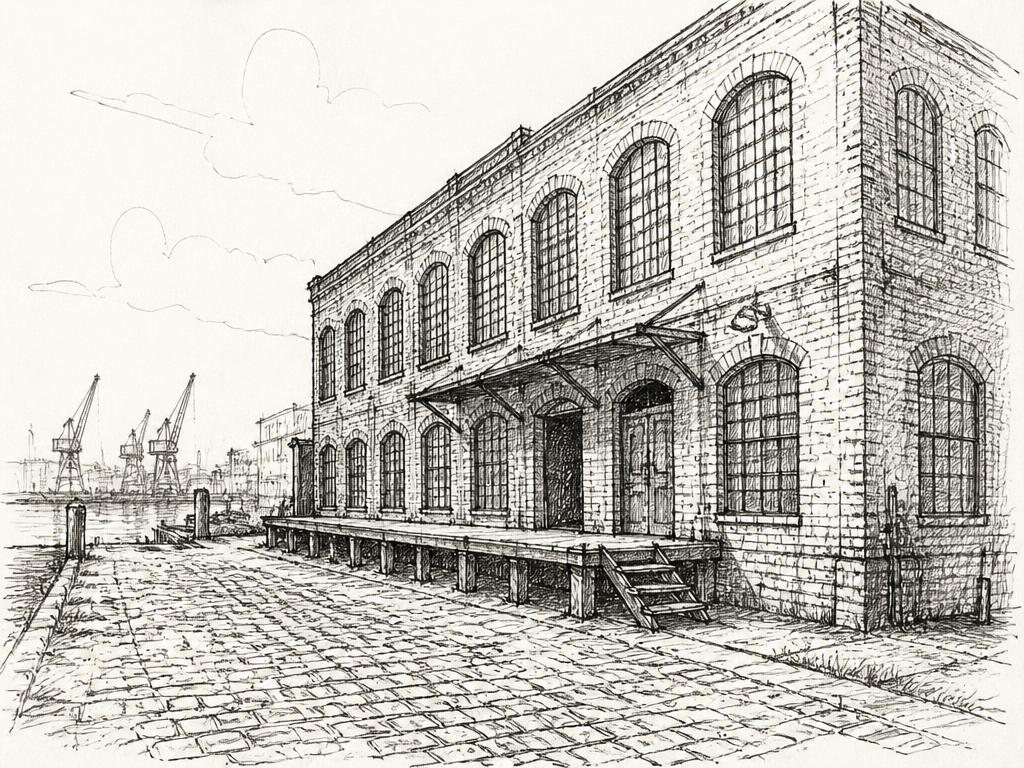
Brick warehouses and deep-water piers at the end of the peninsula, the same freight-era stock as the canal blocks but without the rezoning pressure. No subway, so you drive or walk in.
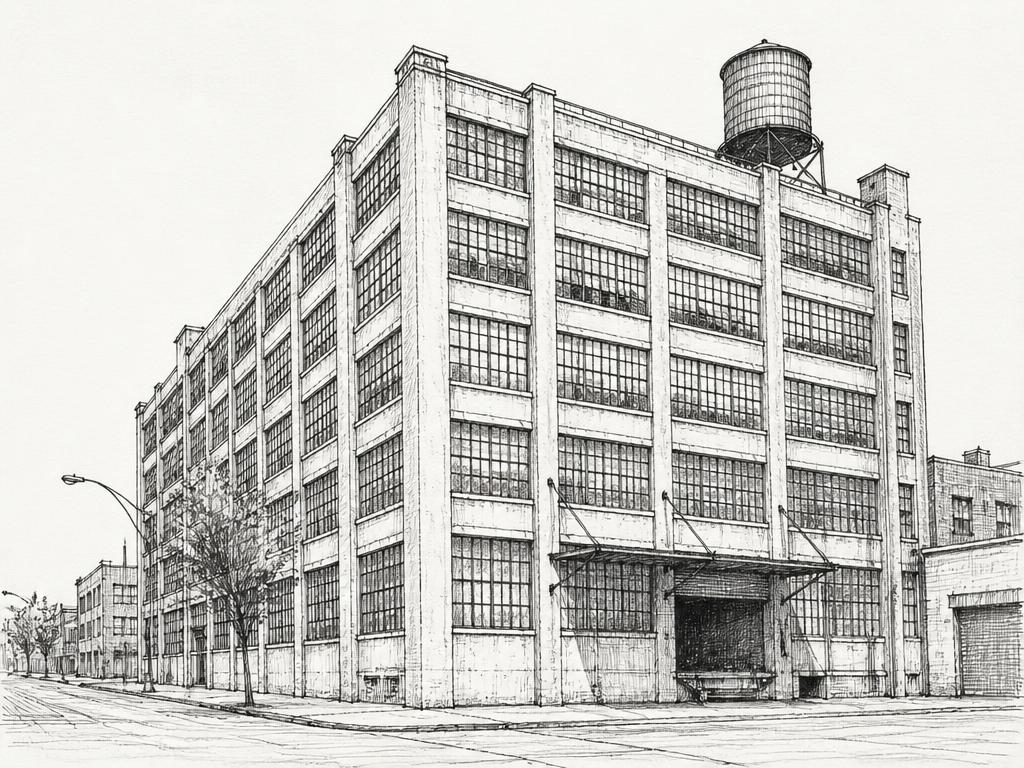
Enormous reinforced-concrete daylight factories along the waterfront, still zoned and used for manufacturing. Where Gowanus tenants go when they need a guaranteed decade of industrial use.
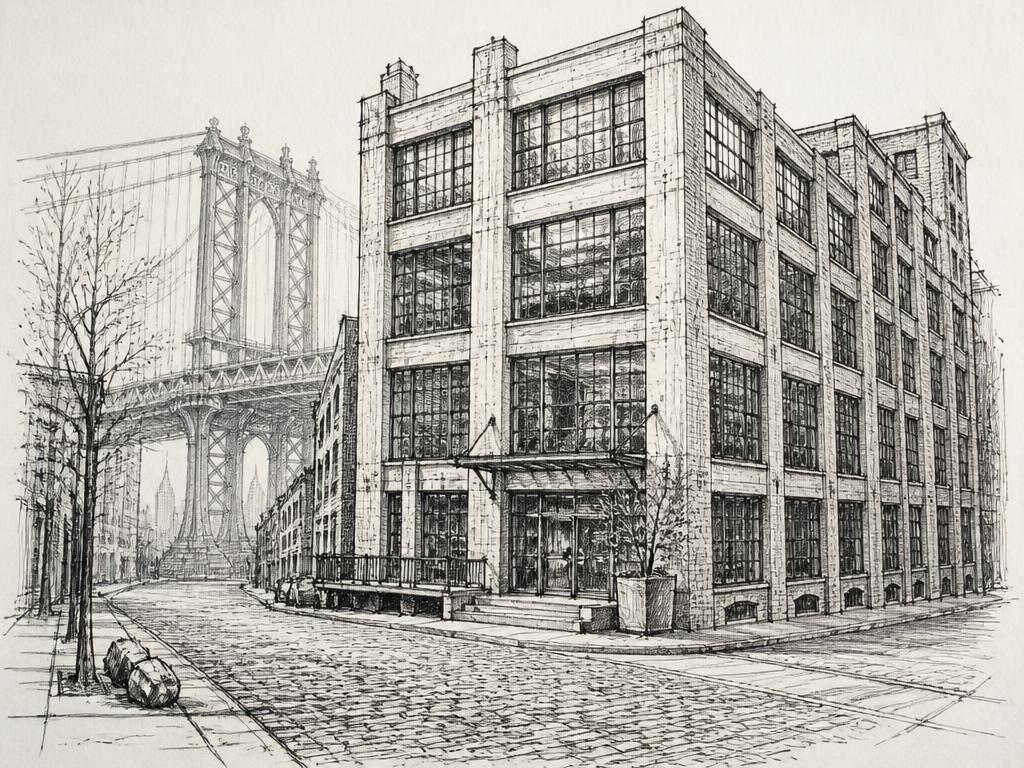
Cobblestone streets and heavy timber and concrete lofts under the bridges. The finished, fully converted version of what Gowanus still does raw.
What people ask before they take a loft in Gowanus.
01What counts as a 'creative office loft' in Gowanus?
02How much does loft space in Gowanus cost?
03What's the smallest space I can rent here?
04How do I get to Gowanus?
05Can I do fabrication, food production or light manufacturing here?
06What did the 2021 rezoning actually change?
07Should I worry about the canal and the Superfund cleanup?
08How is Gowanus different from Bushwick or East Williamsburg?
09What are the classic Gowanus loft blocks?
10Do you actually have off-market listings?
Got one we didn't cover? Put it in the brief above, or call 646-291-2018.
The words that decide what you're signing.
Every term that turns up on a tour, in a floor plan or in a lease — what it means, why it costs you, and how it behaves in this neighborhood specifically.
- Demolition clause
A lease provision letting the landlord terminate early — usually on defined notice — if they intend to demolish or substantially redevelop the building.
Why it mattersIt converts a five-year lease into something much shorter at the landlord's option. If you are spending real money on a build-out, it is the single most important clause in the document.
In GowanusThis is the Gowanus term. After the 2021 rezoning, some owners are leasing industrial floors for the next decade and some are leasing while they plan to redevelop — and the two look identical on a tour. Ask whether there is a demolition clause, how much notice it requires, and whether you are compensated for unamortised improvements. A landlord who refuses to discuss it has answered the question.
- The 2021 rezoning
The city rezoned roughly eighty blocks around the canal from manufacturing to mixed use, permitting residential development on land that had been industrial.
Why it mattersIt changed what the land is worth and therefore what owners intend to do with it. The buildings did not change; the incentives did.
In GowanusThis is why Gowanus reads differently from East Williamsburg or Sunset Park, where the industrial zoning held. Here the supply of industrial floors is shrinking rather than stable — which is not a reason to avoid the neighborhood, but it is a reason to ask about the owner's plans before you sign a long lease.
- Roll-up door at grade
A vertically opening door at street level, wide enough to drive a vehicle through or to load directly from the sidewalk without a dock.
Why it mattersIt is the difference between carrying material through a lobby and driving a van inside. For fabricators, art handlers and anyone moving anything large, it decides the building.
In GowanusThis is what people actually come to Gowanus for — industrial access half an hour from Midtown. Ask the clear width and height of the opening, whether it is yours or shared, and whether the street outside is legal to load on.
- Filled marsh
Ground made by filling in former tidal wetland. Much of the land either side of the canal is exactly this.
Why it mattersIt sits low, it drains poorly, and it is the reason the flood exposure here is real rather than theoretical. It also affects what is involved in any work that breaks ground.
In GowanusAsk about the building, not the block: what happened to the ground floor and the cellar in the last serious storm, whether there is a flood barrier or a pump, and where the electrical panel sits. A cellar that flooded is a very different proposition from a fourth floor that never has.
- Superfund cleanup
The federal Environmental Protection Agency programme for long-term contamination cleanup. The canal was designated in 2010 and has been under dredging and capping since.
Why it mattersFor an office or studio tenant it is largely a non-issue — the designation covers sediment in the waterway rather than the buildings beside it. It matters for ground-floor uses that disturb soil, for new construction, and for financing an acquisition.
In GowanusAt street level what it means day to day is noise, truck traffic and sections of bank closed off in places. It is finite and federally supervised. Be informed rather than worried — but if you are taking ground-floor space adjoining the canal, ask the question directly.
- Brick and timber industrial
Load-bearing brick with heavy timber posts and joists, built between roughly 1880 and 1940 to serve the canal. High ceilings, large factory windows, floors framed for machinery.
Why it mattersIt is the stock that gives you character and capability together — but timber framing means the floor load is often lower than the building looks.
In GowanusAlmost everything you tour here is this. The buildings were put up to load and unload the canal, which is why so many have doors at grade and freight worth using. That inherited capacity is the product.
- Floor load
The weight a floor is rated to carry, in pounds per square foot. Live load is what you can put on it; dead load is the structure itself.
Why it mattersPresses, kilns, racking, stone and dense storage all need a number in writing before anything is ordered.
In GowanusGet the rating for your specific floor. Ground floors here generally carry very well because they sit on slab; upper floors in the timber stock are frequently lower than tenants assume. If you are putting weight down, the ground floor is usually the answer — which then puts you back into the flood question.
- Clear-to-deck
The distance from the finished floor to the underside of the structure above — the true height, before ductwork, sprinklers or lighting.
Why it mattersIt decides racking height, whether a mezzanine is possible, and how a large object moves through the space.
In GowanusAsk for clear-to-deck and separately for the height at the roll-up door opening. Those are different numbers, and it is the door that decides what actually gets into the building.
- Freight elevator
A goods lift, usually with manual gates, rated in pounds. In many older buildings it is run by a building employee rather than by tenants.
Why it mattersCapacity decides what you can move in. The operator's hours decide when.
In GowanusPlenty of Gowanus buildings are low-rise enough that the roll-up door does the work and the freight is secondary. If you are above the second floor, ask capacity in pounds and whether the car opens into your space — and whether it still runs on a Saturday.
- Three-phase power
An electrical service delivering power in three alternating currents rather than one. Required for most serious machinery, large compressors and industrial equipment.
Why it mattersAdding it is a utility timeline, not a landlord favor, and it can run months. Ask what is available, at what amperage, what the panel has spare, and who pays.
In GowanusMuch of the working stock here already has it, because the buildings never stopped being industrial. Where it does not, weigh the upgrade against the remaining term — spending months and real money on service in a building with a demolition clause is a bad trade.
- Certificate of occupancy
The city document stating what a building is legally permitted to be used for, floor by floor.
Why it mattersIt governs your use regardless of what the lease says or what the last tenant did.
In GowanusSince the rezoning, buildings on the same block can be heading in opposite directions. The certificate tells you what a building is today; the demolition clause tells you what the owner intends. Read both.
- Letter of intent
A short document setting out the commercial terms — rent, term, free rent, improvement money — before lawyers draft a lease. Generally non-binding, except for any confidentiality or exclusivity clauses inside it.
Why it mattersTerms conceded in a letter of intent are very hard to claw back in the lease, and the parts that are binding are binding.
In GowanusPut the demolition clause into the letter, not the lease draft. Whether one exists, and on what notice, is a commercial term here rather than legal boilerplate — and it is far easier to agree before lawyers are involved than after.
- Good Guy Guarantee
A limited personal guarantee, near-universal in New York commercial leases. You personally guarantee the rent only until you vacate — provided you give the agreed notice, hand the space back broom-clean, and are current on rent. You are not personally liable for the balance of the term.
Why it mattersIt is the difference between walking away owing two months and walking away owing four years. Some landlords present a full personal guarantee and call it a good guy. Read what the document actually says.
In GowanusIf the lease carries a demolition clause, the guarantee should be symmetrical: your notice to leave and their notice to terminate ought to bear some relation to each other. A landlord who can end your lease on six months while holding you to a twelve-month guarantee has the better end of that deal.
- Escalation
How the rent rises over the term. Usually a fixed annual percentage, but sometimes tied to the porter's wage — a union building-service wage rate — or to an inflation index.
Why it mattersA rent that looks flat is not. At three percent a year, the fifth year of a five-year deal is roughly thirteen percent above the first. Budget from the last year, not the first.
In GowanusFixed percentage is the norm here. The more useful negotiation in Gowanus is term length and renewal rights rather than the escalation rate — in a shrinking supply, the option to stay is worth more than a slower increase.
- TI allowance and work letter
The improvement money a landlord contributes to a build-out, and the document defining who builds what, to what standard, and who pays for it.
Why it mattersAs-is and vanilla box mean very different things. Without a work letter you can find yourself paying for power, venting or a demising wall you assumed came with the space.
In GowanusAsk about amortisation, not just the amount. If there is any chance of an early termination, improvement money you have spent and not yet used up should come back to you — get that written down, because it is the clause that decides whether a demolition clause costs you money or merely time.
- Holdover
Staying in the space after the lease ends without a signed extension. Leases almost always penalise it heavily, commonly at one and a half to two times the last rent.
Why it mattersIt is the fallback nobody plans for and many tenants end up in, because a new space is not ready on time.
In GowanusWorth understanding here specifically, because a demolition clause or a non-renewal can put you on the market at short notice. If your build-out took four months to plan the first time, assume the next one will too — and start looking earlier than feels necessary.
You know what to ask now. Tell us what you're after.
Seven questions, no account, nothing to download. A person reads every one — and comes back with floors that match, including the ones that never reach a listing site.
Written from buildings we've actually walked. If something here is wrong, or a term is missing, tell us — we'd rather fix it than have it repeated back to us on a tour.
Got a loft
building here?
We probably know a tenant for it. Quietly.
Let's talk→