The Definitive Guide to
Gowanus Canal Lofts.
A field guide to the last industrial floors in brownstone Brooklyn — what the canal built, what the rezoning is quietly taking away, and the questions to ask before you sign a lease on a block that may not be industrial in five years.
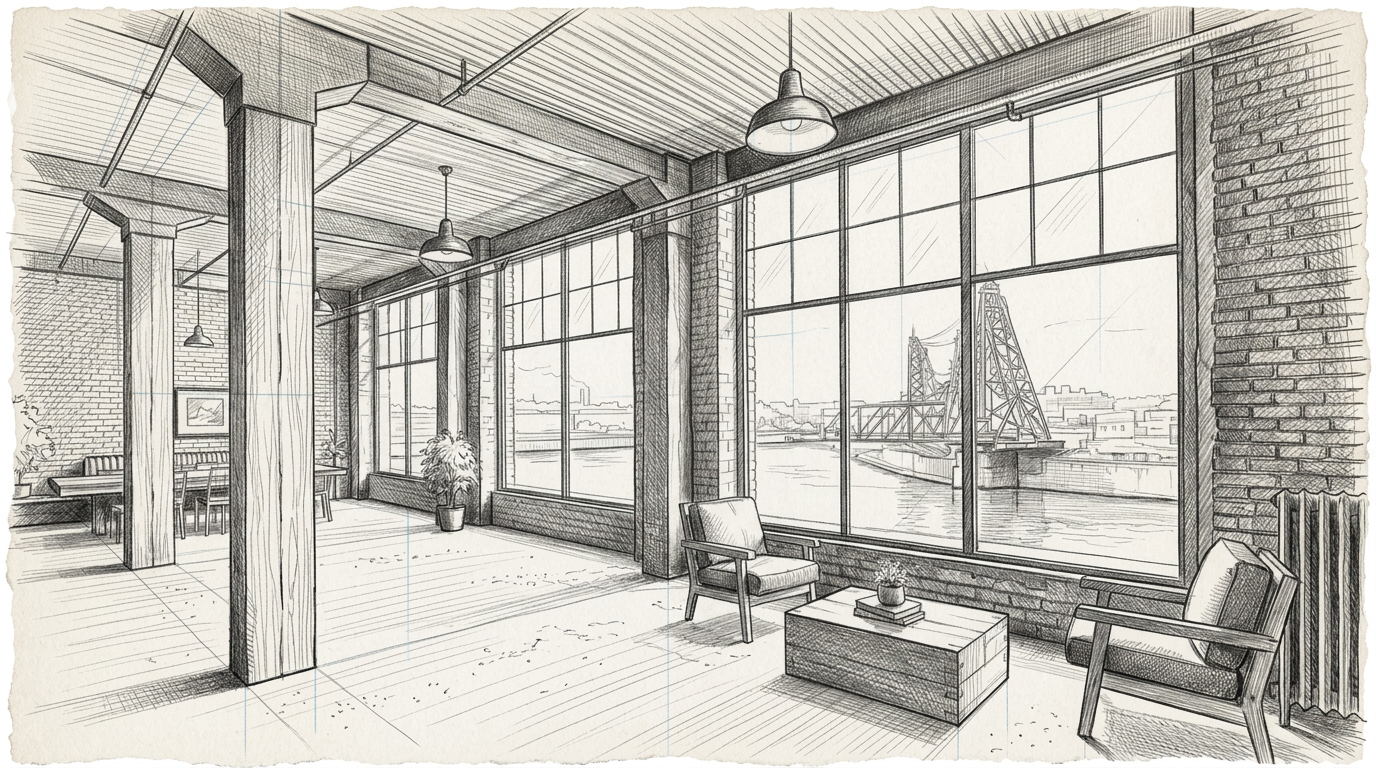
What actually counts as a loft here
Gowanus exists because of a mile and a half of water. The tidal creek was dredged and bulkheaded into a shipping canal between 1849 and 1869, and within a few decades it was one of the busiest commercial waterways in the country — coal, lumber, brownstone, grain and cement moving into a city building itself as fast as it could. The buildings that went up along the banks to handle all that are the ones you tour today.
A real Gowanus floor has some combination of the following: brick or timber structure from roughly 1880 to 1940, ceilings 11 to 16 feet, big factory windows, floor loads rated for freight, a roll-up door at grade or a working freight elevator, and not much build-out. What makes the stock unusual isn't the buildings — Bushwick has similar ones — it's the setting. This is genuinely industrial space with Carroll Gardens on one side, Park Slope on the other, and a half-hour commute to Midtown.
Three kinds of building, three different deals
The canal-side industrial building (roughly 1880–1930). Brick and heavy timber, right on or a block off the water, built to load barges. Deep plates, high floor loads, roll-up doors, and the best raw space in the neighborhood. These are also the buildings most exposed to both the Superfund work and the rezoning, so they're where the questions in the next section matter most.
The converted studio building. Scattered through the Union, Carroll and Douglass Street blocks — industrial shells lightly finished for creative tenants, demised into studios and suites from a few hundred square feet up. Some have decent heat and power, some don't. This is where nearly all the small space is, and where a two-person practice can actually get a door of its own.
The heavy warehouse toward Hamilton and Ninth. The southern end, closer to the expressway and the working waterfront. Concrete and steel, wide bays, real docks, higher floor loads, and the lowest rents in the neighborhood. Furthest from the F and G, best for anyone whose business arrives on a truck rather than a train.
What to check on a Gowanus tour
The owner's plans — ask first, not last. The 2021 rezoning allows residential development on roughly eighty blocks that were manufacturing, so some owners are leasing space while they plan, assemble or wait. Ask what they intend, how long the remaining term is, whether there's a demolition or relocation clause, and what happens to your build-out if the building trades. A straight answer makes Gowanus one of the best deals in Brooklyn; a vague one is a reason to keep walking.
Water, at three different levels. Much of this neighborhood is filled marsh and sits low. Ask what happened in the last serious storm, whether the ground floor or basement has flooded, and where the mechanicals are. Then ask about the canal work separately — the EPA has been dredging and capping since 2010, and while it's finite and federally supervised, it's genuinely disruptive at street level in places.
Power. Ask whether three-phase service is available and at what amperage, what the panel has spare, and who pays to upgrade it. The canal-side industrial stock is generally well served; the lightly converted studio buildings frequently are not, and finding out after you've signed is expensive.
Loading, and the bridges. Ask whether it's a dock, a roll-up door or a shared curb cut, and get the clear height. Then look at your actual route in — the canal splits the neighborhood, the crossings are limited, and the Carroll Street bridge is a retractile landmark from 1889 with the weight limits you'd expect. A block that looks close on a map can be an awkward drive.
Floor load. Ask for the live-load rating in PSF and get it in writing. The canal-side and Hamilton Avenue buildings were built to hold cargo and generally carry far more than you need; some of the converted upper floors are lower than tenants assume. If you're placing a kiln, a press, dense storage or heavy equipment, this number decides the building.
Who's arriving next door. More relevant here than in any other neighborhood we cover. Residential is going up on rezoned parcels, sometimes mid-block, and new neighbors change what a building will tolerate on noise, hours and trucks. Ask what's approved on the adjacent lots before you assume today's rules will hold.
Where the loft floors actually are
The canal runs north to south through the middle, and it organizes everything. Three pockets, and the water decides which one suits you.
The Third Avenue spine. The commercial and cultural centre of gravity now — Powerhouse Arts in the old power station, the breweries, the fabrication shops, the restaurants. Converted industrial floors above and behind, walkable to the R at Union Street, and the strongest creative community in the neighborhood. Rents at the top of the range and worth it if you want neighbors.
The canal-side blocks — Union, Carroll, Douglass, Degraw, Third Street. The heart of it. Brick and timber industrial buildings either side of the water, the studio conversions, the retractile bridge, and the F and G at Carroll Street. This is where most of our Gowanus work happens and where the small and mid-sized space lives.
The southern end — Hamilton Avenue, Ninth Street, toward Red Hook. Heavier stock, real docks, wider bays, lower rents, and the expressway close by. Less charm and a longer walk to the subway, but if your work involves trucks or equipment this is the part of Gowanus that still does that properly — and it runs straight into Red Hook, which we also cover.
What tenants ask us about most
“How much is a floor?” Roughly $30–$50 per SF per year — the low end for raw industrial floors away from the subway, the high end for finished creative office near Union Street and Third Avenue. Ask for the electrical service, the heat source, the floor load, and whether the rent is quoted on rentable or usable square footage before comparing two buildings.
“How does the rezoning affect my lease?” It's the question to lead with here. Some owners are leasing space while they plan or wait. Ask directly what the owner intends, how long the remaining term is, whether there's a demolition clause, and what happens to your build-out if the building trades. A good answer makes Gowanus a great deal; a vague one is a reason to keep walking.
“Can I make noise and work late?” On the remaining manufacturing blocks, generally yes — your neighbors are fabricators and producers doing the same. But residential is arriving on rezoned parcels, sometimes next door, and new neighbors change what a building will tolerate. Get the building's hours and rules in writing.
“What's the catch?” Water and uncertainty. Much of the neighborhood is filled marsh, sits low, and floods — check the ground floor, the basement and the storm history. And the industrial supply is shrinking rather than stable, so the building you like may not be leasing this kind of space in five years. In exchange you get industrial floors twenty minutes from Midtown with genuinely good neighbors.
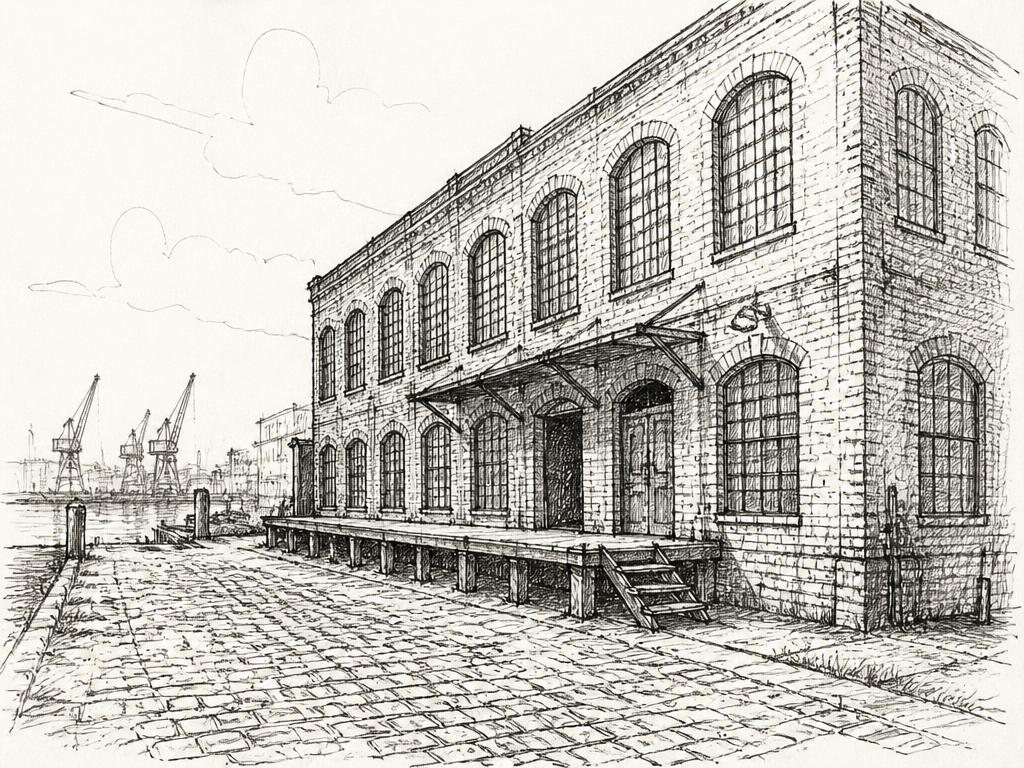
Brick warehouses and deep-water piers at the end of the peninsula, the same freight-era stock as the canal blocks but without the rezoning pressure. No subway, so you drive or walk in.
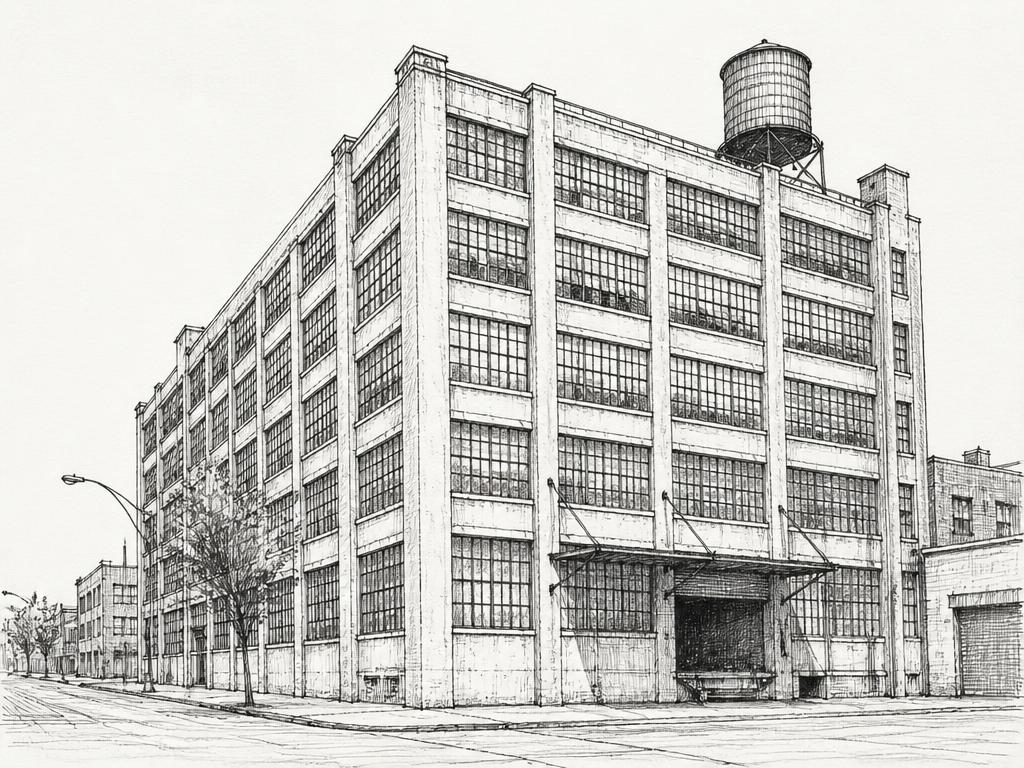
Enormous reinforced-concrete daylight factories along the waterfront, still zoned and used for manufacturing. Where Gowanus tenants go when they need a guaranteed decade of industrial use.
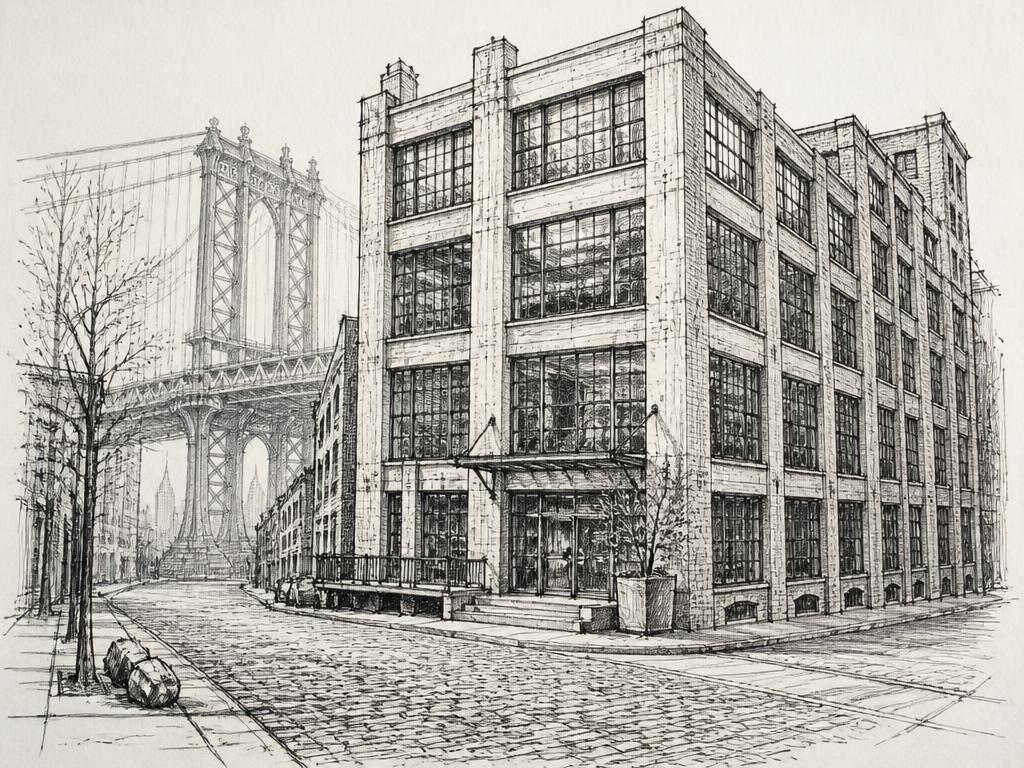
Cobblestone streets and heavy timber and concrete lofts under the bridges. The finished, fully converted version of what Gowanus still does raw.
Tell us what you're after.
Seven quick questions. A person reads it. We keep an eye out — including for floors that never hit a listing site.
Start the Brief →